
 Türkçe
 English

 +90 532 575 20 88
Rhinoplasty Turkey (Nose Job)
Rhinoplasty surgery is traditionally performed using either the open or closed technique. If significant structural changes are required to the nose and/or the internal septum, the open rhinoplasty approach is generally preferred.

What Is a Nose Job (Rhinoplasty)?
A Nose Job, medically known as rhinoplasty, is a comprehensive surgical procedure aimed at improving both the appearance and the function of the nose. This surgery is not performed solely for cosmetic reasons; it also addresses issues such as septal deviation, internal airway obstructions, and post-traumatic deformities. For this reason, the procedure may be referred to as rhinoplasty, septorhinoplasty, or in some sources, nasoplasty.
The goal of rhinoplasty is to reshape the nasal structure in a way that best suits the patient’s facial proportions while also creating an internal anatomy that allows for easier breathing. During surgery, the nasal hump can be corrected, the nasal tip can be reshaped, the nostrils can be narrowed, and curvatures of the nasal bridge or septum can be straightened. All of these steps are planned to achieve a natural-looking, harmonious, and functional nose.
With modern surgical techniques, rhinoplasty has evolved into a highly individualized procedure that offers a more comfortable recovery period and more predictable results. In addition to meeting aesthetic expectations, maintaining a natural appearance and supporting healthy breathing are among the most important objectives of this surgery.
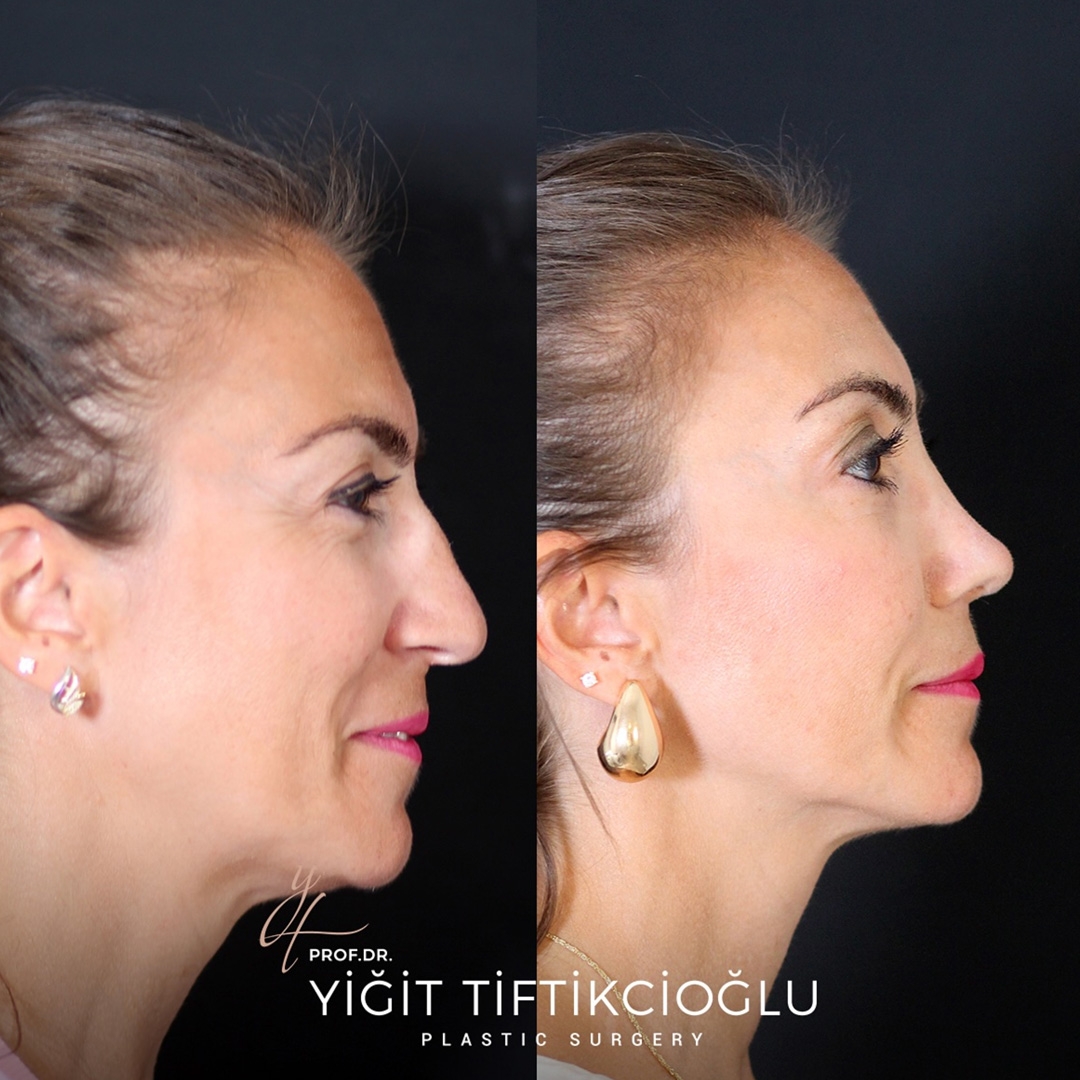
Who Can Have a Nose Job (Rhinoplasty)?
A Nose Job (Rhinoplasty) can be performed once nasal bone development is complete, provided there is no severe trauma or breathing obstruction. Bone development is typically completed around age 16 in females and age 17 in males.
Candidates for a Nose Job (Rhinoplasty) include individuals who wish to:
- Correct congenital nasal anomalies,
- Reduce, reshape, or lift the nose,
- Narrow or widen the nostrils,
- Align the overall shape of the nose with other facial features.
The decision to undergo surgery should be made through thorough consultation between the patient and the surgeon, following the surgeon’s professional recommendations.
Specific candidates include:
- Those unhappy with the aesthetic appearance of their nose: Individuals concerned with a nasal hump, drooping tip, asymmetry, or wide nostrils.
- Those experiencing breathing difficulties: Individuals with septal deviation, internal nasal obstruction, or valve collapse.
- Those with post-traumatic nasal deformities: Individuals whose nasal structure has been altered due to fractures or injuries.
- Those with congenital nasal deformities: Individuals with structural curvature, collapsed nose, or developmental anomalies.
- Those seeking facial harmony: Individuals who want the nose size or shape to better match other facial features.
- Those in good overall health: Individuals with well-controlled chronic conditions and no serious health issues that would impair healing.
Which Techniques Are Used in a Nose Job (Rhinoplasty)?
Nose Jobs (Rhinoplasty) are primarily performed using either the open or closed technique. When significant changes to the external appearance or internal structures of the nose are required, open rhinoplasty is usually preferred. In this method, a small incision is made on the columella, allowing the surgeon to directly view the nasal framework and work with greater precision and control.
In closed rhinoplasty, all incisions are made inside the nostrils. This approach leaves no visible scars and is effective for limited structural changes in suitable candidates. Both aesthetic refinements and functional improvements can be achieved using this technique.
Another increasingly popular method is Piezo (Ultrasonic) Rhinoplasty, often referred to as “painless nose surgery” in public. The key difference lies in the ultrasonic device used during the procedure. Piezo technology targets only the bone tissue, protecting the skin, soft tissue, and blood vessels. Special ultrasonic tips allow the bones to be shaped with extreme precision. This approach can reduce postoperative swelling and bruising and may shorten the recovery period.

How Is a Nose Job (Rhinoplasty) Performed?
Nose Job (Rhinoplasty) procedures can be carried out using either the open or closed technique, depending entirely on the patient’s needs and the structural characteristics of the nose. It is crucial that individuals considering a Nose Job choose a surgeon experienced in both open and closed techniques.
In recent years, the use of Ultrasonic Piezo devices has emerged as a significant innovation in rhinoplasty. This technology shapes the bone delicately without damaging the soft tissues inside the nose, allowing for a more controlled, meticulous, and low-trauma procedure compared to traditional methods.
What Are the Rhinoplasty Techniques?
- Open Rhinoplasty
- Closed Rhinoplasty
- Nose Job Using Ultrasonic Piezo Device
1. Open Rhinoplasty
Open Rhinoplasty is recommended for patients who have nasal deviations, asymmetry, breathing problems, or deformities of the nasal tip. The main advantage of open rhinoplasty is that the nasal skin is lifted, allowing the surgeon to clearly see the underlying bones, cartilage, and airways with the naked eye.
In an open rhinoplasty procedure, in addition to the same incisions made inside the nostrils as in closed rhinoplasty, a small incision is made in the columella (the tissue between the nostrils),connecting the two sides. This allows the nasal skin to be lifted like a flap and the underlying structures to be visualized easily. Open rhinoplasty is preferred when there are significant structural deformities inside the nose. The surgeon’s expertise directly affects the success of the procedure, making surgeon selection extremely important. After open rhinoplasty, a very fine scar of 3–4 mm may remain on the columella, which fades over time and becomes almost invisible from the front.
2. Closed Rhinoplasty (Nose Job)
In closed rhinoplasty, incisions are made entirely inside the nostrils, and the nasal structures are accessed through these openings to make corrections. Like open rhinoplasty, the goal of closed rhinoplasty is to improve both the shape and function of the nose.
The field of view in closed rhinoplasty is limited, and access is more restricted. This method is typically more suitable for patients with no major asymmetry or deformity, a well-formed nasal tip, and no significant breathing problems.
When choosing a rhinoplasty technique, the surgeon’s recommendations, the patient’s needs, and even the patient’s skin type should all be considered. The key is that the surgical technique is personalized to the individual patient.
3. Nose Job (Rhinoplasty) Using Ultrasonic Piezo Device
Piezo Rhinoplasty uses a precise ultrasonic saw that generates vibrations to cut or sculpt the nasal bones.
This technique eliminates the need for conventional surgical tools and, due to its tissue-selective properties, shapes the bones without damaging surrounding muscles, blood vessels, or skin.
During Piezo Rhinoplasty, the soft tissue integrity is preserved, and the bones can be cut with high precision. The ultrasonic device allows the vibration power to be adjusted according to bone density. This provides safety and comfort for both the surgeon and the patient. Recovery is faster because the bones are cut gently without fracturing, reducing postoperative bruising and swelling. Long-term stable results are achieved while bone healing is accelerated.
Since the Piezo device targets only the bones, surrounding tissues and blood vessels are not damaged. As a result, bleeding is much less compared to open or closed rhinoplasty. The Piezo technique allows both major nasal problems and minor irregularities to be corrected while enabling patients to return to daily life more quickly.
What Are the Risks of a Nose Job (Rhinoplasty)?
Rhinoplasty (Nose Job) is a highly effective surgical procedure for reshaping the nose, but like all surgeries, it carries certain risks. Most of these risks can be minimized with an experienced surgeon, proper planning, and careful postoperative care. However, it is important to inform patients about potential complications.
Possible Risks After a Nose Job (Rhinoplasty):
- Bleeding: Mild bleeding is normal after surgery, but occasionally more significant bleeding may occur.
- Infection: Although rare, there is a risk of infection at the surgical site.
- Asymmetry: Minor differences in shape between the two sides of the nose may appear.
- Breathing difficulties: Swelling of the nasal tissues or healing processes may cause temporary or, rarely, permanent obstruction.
- Skin sensation changes: Temporary numbness or reduced sensation around the nose may occur.
- Shape irregularities from healing: Unexpected tissue healing can result in undesired changes in nasal shape.
- Need for revision: Some patients may require a minor secondary procedure to achieve ideal results.
With careful evaluation, realistic expectations, and the selection of an experienced surgeon, these risks can largely be controlled.
Postoperative Process After a Nose Job (Rhinoplasty)
The recovery process after a Nose Job (Rhinoplasty) can vary from person to person. Factors such as the specific changes made to the nose, the surgical technique used, the patient’s skin type, adherence to postoperative care instructions, and the surgeon’s expertise can all influence the healing period.
Rhinoplasty is performed under either general or local anesthesia. Usually, patients can be discharged on the day of surgery after being evaluated by the surgeon. Our preference is to perform the procedure under general anesthesia and keep the patient in the hospital for one night for safety reasons.
We do not use the traditional nasal packing that many patients fear. Instead, we use special silicone tubes for 2–3 days after Rhinoplasty. These silicone tubes do not stick to the skin, are easy to remove, and have channels that allow for breathing.
Pain is generally mild and typically resolves within 1–2 days. Most patients do not experience significant bruising or swelling, though tissue characteristics can cause some individuals to bruise more than others. Pain, bruising, or swelling does not usually reach a level that significantly affects quality of life. Swelling and bruising on the face generally disappear within a week.
Patients usually look significantly improved by the end of the first month, but the nose fully settles over the course of about one year. The healing process can be slower in patients with thick or very oily skin.
To shorten the recovery period and reduce the risk of complications, patients should carefully follow the postoperative care instructions provided by their surgeon.
Nose Job (Rhinoplasty) Turkey Cost in 2026
The cost of a Nose Job (Rhinoplasty) in 2026 can vary depending on hospital pricing policies, the changes required for the patient’s nose, the surgical technique used, materials employed during the procedure, whether the patient has undergone previous nose surgeries, and the surgeon’s experience and expertise. Since each Nose Job (Rhinoplasty) is individually planned, the final price is determined after a consultation with the surgeon.
Recovery Time After a Nose Job (Rhinoplasty)
The healing period after a Rhinoplasty depends on the patient’s age, skin type, the extent of changes made during the surgery, and the technique used. Patients can usually stand up and walk around the room about half an hour after surgery.
Most patients can return to desk work or school 3–4 days after the procedure. They can travel back to their city or country one week after surgery. By one month, patients often look well enough for important photos, such as graduation or engagement pictures.
Full healing typically takes 6–12 months. One year after the Nose Job (Rhinoplasty),the nose has largely reached its final shape, which will remain stable over the years.
Although recovery varies individually, international surgical literature (e.g., Facial Plastic Surgery, JAMA Facial Plastic Surgery, Aesthetic Surgery Journal) reports similar average healing times. Early recovery begins when the nasal splint and bandages are removed in the first week, and most swelling subsides within 2–4 weeks. However, the nose may take 6 months to 1 year to fully settle and reveal its final form.
Stages of Recovery After a Nose Job (Rhinoplasty)
- First Week: Splints and bandages are removed, and most bruising and swelling subside.
- 2–4 Weeks: Breathing gradually improves, and patients can usually return to social activities during this period.
- 3–6 Months: Minor swelling continues to decrease, and nasal contours become more defined.
- 6–12 Months: Tissues fully settle, and the final shape of the nose becomes apparent, as noted in scientific literature.
Following the surgeon’s recommendations, attending regular check-ups, and avoiding factors that delay healing such as smoking and alcohol help ensure a smoother recovery process.
Postoperative Care After a Nose Job (Rhinoplasty)
- Head Elevation: During the first two nights after a nose job, sleep with your head elevated. Using high pillows helps reduce the risk of swelling.
- Avoid Glasses: Do not wear eyeglasses for 3–5 months after surgery. Pressure from glasses can deform the cartilage or alter the shape of the nose.
- Sun Protection: Avoid prolonged sun exposure until the nasal skin has fully healed. If you need to go outside, use sunscreen and wear a hat to prevent skin discoloration.
- No Alcohol or Smoking: Avoid alcohol and smoking before and after rhinoplasty. Both slow down tissue healing, and alcohol can increase bleeding risk.
- Gentle Nose Care: Do not blow your nose forcefully. Use surgeon-recommended saline sprays to clear the nasal passages while maintaining internal moisture.
- Soft Diet: In the early recovery period, avoid hard or chewy foods. Opt for soft, easy-to-eat meals.
- Clothing Considerations: Avoid wearing tight-necked clothing that may touch the nose; buttoned or loose-fitting garments are preferable.
- Exercise Restrictions: Avoid high-intensity exercises that increase blood pressure for 2 months or until your surgeon gives approval. Light walks can usually be resumed 2–3 weeks after surgery.
- Follow-Up and Medications: Do not skip postoperative check-ups. Follow the surgeon’s instructions carefully, including any prescribed pain medications, to ensure a safe and smooth recovery process.
Frequently Asked Questions About Rhinoplasty (Nose Job) in Turkey
Is Turkey good for nose jobs?
Turkey is internationally renowned for its expertise in rhinoplasty, combining advanced surgical techniques with highly experienced surgeons. Many patients choose Turkey due to the high quality of care, modern clinics, and competitive prices, making it a top destination for both aesthetic and functional nose surgeries. Clinics often provide comprehensive care, from pre-operative consultations to post-operative follow-ups, ensuring safe and satisfying results.
Does rhinoplasty include flights in Turkey?
Rhinoplasty packages in Turkey sometimes include flights, but this depends on the clinic or medical tourism provider. Many clinics offer all-inclusive packages covering surgery, accommodation, airport transfers, and sometimes flights, creating a seamless experience for international patients. It’s important to confirm the package details directly with the clinic to understand what is included and avoid unexpected costs.
Who is the best Turkish doctor for rhinoplasty?
Turkey has numerous highly skilled rhinoplasty surgeons recognized worldwide for their expertise. One of the leading experts is Prof. Dr. Yigit Ozer Tiftikcioglu, known for his precision and successful results in both aesthetic and functional rhinoplasty. The best doctor for you still depends on your specific needs, the complexity of your nasal structure, and whether you prefer aesthetic-focused or functional-focused surgery. Researching credentials, reviewing before-and-after photos, and checking patient reviews are essential to choose a surgeon with proven experience in both open and closed rhinoplasty techniques.
How long do you stay in Turkey for rhinoplasty?
The typical stay in Turkey for rhinoplasty ranges from 7 to 10 days. This allows time for pre-operative assessments, the surgery itself, and initial post-operative recovery. Most international patients can return home safely after the first week when the initial swelling and discomfort have decreased, but longer stays may be recommended for complex cases or if follow-up consultations are needed.
How much does a nose job cost in Turkey?
The cost of a nose job in Turkey can vary widely depending on the surgeon’s experience, clinic reputation, type of rhinoplasty, and whether additional procedures are needed. On average, prices range from $2,500 to $9,500 USD, making Turkey a highly competitive destination compared to Europe or North America. Premium clinics and highly specialized surgeons may charge more, while all-inclusive packages can provide good value for international patients.
Is Nose Job (Rhinoplasty) permanent?
Rhinoplasty is considered a permanent procedure because it reshapes the bone and cartilage structures of the nose. International publications indicate that a well-performed rhinoplasty can last a lifetime, with only very slight changes occurring due to the natural aging process.
How long does a Nose Job (Rhinoplasty) take?
The surgical duration typically ranges from 1.5 to 3 hours. The exact time depends on the extent of the procedure, nasal anatomy, and any additional interventions.
How long does it take to recover from Rhinoplasty?
Initial recovery usually occurs within 7–10 days, allowing the patient to return to social activities. However, the nose’s final shape and full settling may take 6–12 months, as reported in the scientific literature.
What should be avoided after Rhinoplasty?
During the first weeks, avoid intense physical activity, wearing glasses, sleeping face down, any activity with risk of impact, and prolonged sun exposure. Smoking and alcohol should also be avoided, as they can negatively affect the healing process.
How to Eat After Nose Job (Rhinoplasty)
Post-operative nutrition after a Nose Job (Rhinoplasty) is important to support healing and minimize potential complications. Here are some key dietary recommendations:
- Soft and Light Foods: During the first few days after surgery, consume soft and easily digestible foods. This prevents pressure on the nose while chewing. Examples include pureed soups, yogurt, pudding, and boiled vegetables.
- Stay Hydrated: Adequate fluid intake is essential for healing. Water, herbal teas, and fresh fruit juices are recommended, while carbonated drinks should be avoided.
- Reduce Salt and Spices: Salt can cause water retention and increase swelling. Limiting salt and spicy foods can help reduce post-operative swelling more quickly.
- Protein and Vitamins: Foods rich in protein, vitamin C, and vitamin A support tissue repair and immune function. Good choices include chicken, fish, eggs, leafy green vegetables, citrus fruits, and carrots.
- Avoid Alcohol and Caffeine: Alcohol and caffeine can slow the healing process and lead to dehydration, so they should be avoided after surgery.
- High-Fiber Foods: Post-surgery inactivity can lead to constipation. Eating fiber-rich foods such as whole grains, vegetables, and fruits can help prevent this.
- Consume Cold Foods: Cold foods, such as chilled soups or beverages, can help reduce swelling and discomfort in the first few days.
Following your surgeon’s specific dietary instructions and post-operative meal plan will accelerate recovery and minimize the risk of complications.
Who Should Not Have a Nose Job (Rhinoplasty)?
Rhinoplasty is generally not recommended for individuals with uncontrolled chronic illnesses, bleeding disorders, active infections, or those who do not have realistic psychological expectations.
Is Rhinoplasty (Nose Job) Difficult?
It is a technically detailed surgical procedure. Because the anatomy of the nose is complex, the process is more predictable and safer when performed by an experienced surgeon.
Is Rhinoplasty Dangerous?
As with any surgical procedure, there are risks. However, according to international surgical sources, rhinoplasty is considered safe when performed under proper conditions by a qualified surgeon.
Does Rhinoplasty (Nose Job) Cause Long-Term Problems?
In most patients, long-term results are stable. Rarely, changes in nasal shape may occur due to individual tissue healing characteristics or trauma; in such cases, a revision may be needed.
Which Doctor Should Perform Rhinoplasty ?
A surgeon experienced in facial aesthetics, specializing in both open and closed rhinoplasty techniques—either an ENT (ear, nose, and throat) surgeon or a plastic surgeon—should be preferred.
Is There an Age Limit for Rhinoplasty (Nose Job)?
It is recommended after the completion of bone and cartilage development, typically from 16–18 years old. The upper age limit depends on the patient’s overall health.
What Type of Anesthesia Is Used in Rhinoplasty ?
According to international standards, rhinoplasty is usually performed under general anesthesia. Some minor revision procedures can be done under sedation.
Is Non-Surgical Nose Aesthetic Possible?
Small shape corrections can be done with filler injections, but these are not permanent and cannot achieve the same comprehensive results as a true rhinoplasty.
Is There Bleeding After Rhinoplasty (Nose Job)?
Mild bleeding during the first few days is normal. Severe bleeding is rare and can be controlled by the surgical team.
Is There Loss of Smell After Rhinoplasty ?
Temporary reduction in smell may occur due to swelling or congestion. Permanent loss of smell is extremely rare, according to scientific publications.
Is There Pain After Rhinoplasty (Nose Job)?
Pain is generally mild with modern rhinoplasty techniques. Patients usually describe a feeling of pressure or fullness rather than severe pain.
Which Season Is Best for Rhinoplasty (Nose Job)?
Rhinoplasty can safely be performed at any time of the year. However, periods when it is easier to protect the nose from sun exposure may increase post-operative comfort.

