
 Türkçe
 English

Rhinoplasty in Izmir
Rhinoplasty is a surgical procedure performed using open or closed techniques to correct the shape of the nose and improve its functions, and it must be individually planned for each patient.

What Is Rhinoplasty (Nose Job)?
Rhinoplasty, also known as Nose Job, is a surgical procedure performed with open or closed techniques to reshape the nose and improve its function. It must be individually planned for each patient.
The primary goal of aesthetic rhinoplasty is to create a natural-looking nose that suits the patient’s age, expectations, facial features, and gender. A rhinoplasty operation is considered successful when the nose harmonizes with the overall proportions of the face, the operated appearance is not noticeable, breathing remains comfortable, and the results are preserved for many years.
Choosing a Surgeon for Rhinoplasty
Rhinoplasty is one of the most delicate surgeries within aesthetic and plastic surgery. Therefore, it is essential that the surgeon performing the operation is experienced in rhinoplasty procedures.
Preparation Before Rhinoplasty
It is important that the patient is not using blood-thinning medications before rhinoplasty surgery.
As with any surgical procedure, blood-thinning medications and foods should be avoided before rhinoplasty. If blood thinners are medically necessary, an appropriate plan can be made in coordination with your physician.
Avoid anything that may negatively affect your overall health during the week leading up to surgery. If you develop any illness or upper respiratory infection, your surgery will be postponed.
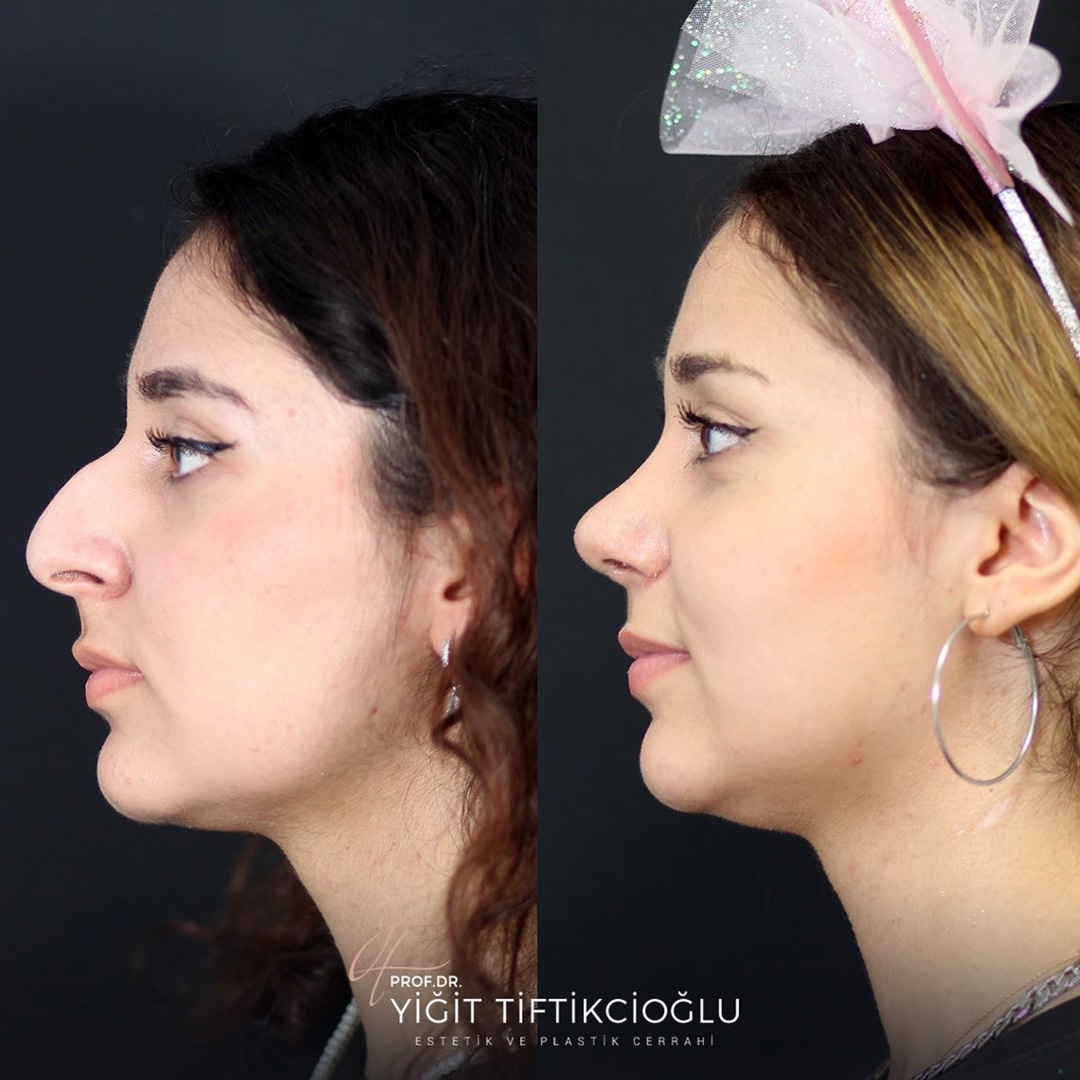
Who Can Have Rhinoplasty?
Rhinoplasty surgery can be performed on individuals who:
- Have congenital nasal deformities that affect breathing,
- Have experienced nasal trauma,
- Feel their nose is not proportional to the overall harmony of their face,
- Wish to correct nasal obstruction while achieving a more natural-looking nose,
- Have completed the internal nasal bone development, and
- Are psychologically ready to undergo a rhinoplasty procedure.
In rhinoplasty operations:
- The nasal hump can be corrected.
- The nostrils can be reduced, narrowed, or widened.
- The nasal tip can be lifted, narrowed, or widened.
- The nose can be made smaller or larger.
- Nasal deviations can be corrected.
Can Everyone Undergo Rhinoplasty?
Rhinoplasty can be performed on anyone who has completed facial development and has no physical or psychological conditions that would prevent surgery. Facial growth typically completes around ages 16–17 in girls and 17–18 in boys.
What Is Natural Rhinoplasty?
Rhinoplasty procedures are complex operations that require continuous refinement and expertise from the surgeon. Each rhinoplasty must be individually planned according to the patient’s unique needs. Therefore, preoperative consultations and facial analysis play a crucial role in achieving a successful and natural-looking result.
How Is Rhinoplasty Surgery Performed?
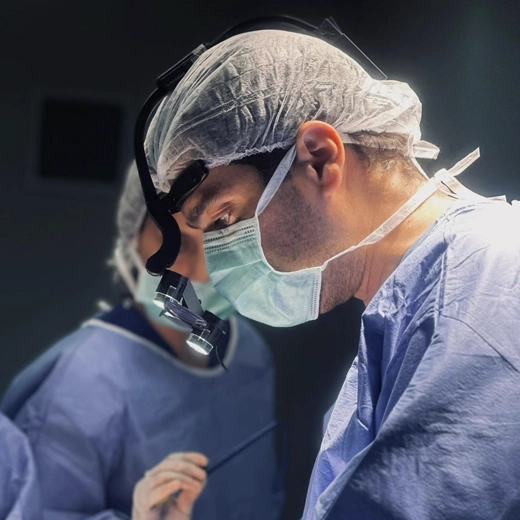
For rhinoplasty to be performed precisely and to achieve reliable results, the procedure must be carried out in a bloodless surgical field with millimetric accuracy. Therefore, specific techniques are used in both anesthesia and surgery. The patient’s blood pressure is carefully controlled throughout the procedure. The surgical instruments used are highly delicate tools designed specifically for rhinoplasty. Additionally, ultrasonic devices such as piezzo or micro-motors may be used to cut bone, increasing precision and minimizing trauma.
Rhinoplasty (Nose Job) Prices in Izmir 2026
Rhinoplasty prices in Izmir for 2026 vary depending on the surgeon’s experience, the scope of the surgery, and the techniques applied.
How Long Does Rhinoplasty Surgery Take?
Primary rhinoplasty surgery (for patients who have not had prior nasal procedures) typically takes between one and a half to three hours.
Recovery After Rhinoplasty Surgery
After the rhinoplasty procedure, patients are kept under observation in the hospital for the first day. Most patients are able to stand up 3–4 hours after surgery and feel well enough to go home within 4–5 hours; however, it is still recommended that patients who have undergone general anesthesia stay overnight for monitoring.
Mild pain may occur during the first two days, but this is usually well controlled with oral pain medications. By the third day, most discomfort has significantly decreased. After the nasal splint is removed on the 7th day, office workers can typically return to work, and students may resume school.
How Many Days Does Rhinoplasty Take to Heal?
The total recovery time after rhinoplasty varies from person to person, but in general, the healing process progresses as follows:
First Week: During the first few days after surgery, swelling and bruising around the nose are common. Mild pain and discomfort may also occur. Nasal splints and internal supports are usually removed during the first week. By the end of the week, most patients can return to their daily routines, although they should still avoid strenuous physical activities.
2–4 Weeks: Most of the swelling significantly decreases during this period, although minor swelling on the nose may persist. Patients can usually return to social activities and light exercise 2–4 weeks after the operation. Internal healing continues, and mild stiffness around the nasal tip may be felt.
3–6 Months: By the third month, the overall shape of the nose becomes more defined. However, swelling—especially at the tip of the nose—may take longer to fully resolve. During this time, the nasal tissues continue to soften and settle into a more natural appearance.
6–12 Months: Final results of rhinoplasty are typically achieved between 6 and 12 months. By this time, the nose is fully healed and has taken its final shape. Any remaining minimal swelling usually disappears completely.
In summary, initial healing occurs within a few weeks, but full recovery and the final appearance of the nose may take 6 months to 1 year.
What Is Non-Surgical Rhinoplasty (Liquid Rhinoplasty)?
The procedure popularly marketed as “liquid rhinoplasty” is essentially an attempt to shape the nose using dermal fillers. While nasal fillers can be helpful for selected patients and specific indications, they can never replace a properly performed rhinoplasty surgery.
Fillers do not correct internal structural issues of the nose and do not strengthen nasal architecture. They only provide camouflage-based improvements in appearance. It should also be remembered that filler results are temporary and may pose a risk of tissue complications over time.
Who Is Not Suitable for Rhinoplasty Surgery?
Individuals who are not ideal candidates for rhinoplasty can be listed as follows:
- Those with general health problems that make surgery risky: With the approval of your primary physician, many health conditions can still allow surgery once the necessary precautions are taken.
- Individuals with psychological disorders: With the approval and cooperation of your psychiatrist, rhinoplasty can be performed in cases where it is medically or functionally necessary. However, undergoing a surgery that alters your facial appearance during a stressful or turbulent period is not recommended. Rhinoplasty should be considered only when you are psychologically stable and have made a well-thought-out decision.
- Individuals under the age of 16: Since nasal and facial development has not been completed, rhinoplasty is generally not recommended before ages 16–17 in girls and 17–18 in boys.
- Those with active infections or acute illnesses: If you currently have a temporary illness, rhinoplasty can be performed after treatment is completed. Surgery is not performed while there is an active infection in the nose or sinuses.
- Pregnant individuals: Aesthetic surgeries are not recommended during pregnancy.
At What Age Can Rhinoplasty Be Performed?
Since midface development is not fully completed, rhinoplasty is generally not recommended before age 16 in girls and age 17 in boys—unless there is an urgent functional need. Apart from this, if the patient’s overall health is good, there is no upper age limit for undergoing rhinoplasty.
Is Rhinoplasty Permanent?
Rhinoplasty generally provides long-lasting, often lifelong results. Changes made to the bone and cartilage structures are permanent. A well-performed rhinoplasty using the correct techniques maintains its outcome for many years. Ultimately, the durability of the result depends on the surgical method used. In rhinoplasty, it is essential to focus on long-term, stable results.
I Had Rhinoplasty but I’m Not Satisfied — Can It Be Corrected?
Yes, it is possible to revise and correct a rhinoplasty that was unsuccessful for any reason. Revision rhinoplasty can be classified into two categories:
Minor revision surgeries:
These are performed when the initial operation was generally successful but small touch-ups are needed. They are usually not complicated procedures, and when performed by an experienced surgeon using proper techniques, these minor corrections are manageable.
Secondary (revision) rhinoplasty:
This refers to rebuilding noses that have lost structural integrity, collapsed, or significantly deformed after the first surgery. Secondary rhinoplasty is much more challenging than primary rhinoplasty and requires a highly experienced surgeon. Because tissue volume may be reduced and scar tissue or deformities may have developed, more advanced techniques are needed. In some cases, cartilage may need to be harvested from the patient’s rib or the back of the ear.
Is Rhinoplasty a Dangerous Surgery?
Rhinoplasty procedures are extremely safe when performed by experienced surgeons. While no surgical procedure is entirely risk-free, rhinoplasty is not considered a high-risk operation.



Even though I am a very anxious and worried person, I felt that sense of trust after just one consultation with Dr. Yiğit. He answered all the questions on my mind very clearl{...}
04.02.2026I had rhinoplasty surgery with Prof. Dr. Yiğit Tiftikcioğlu three years ago, and I have been extremely satisfied with every stage of the process. From the very first consultat{...}
08.01.2026I had rhinoplasty surgery with Dr. Yiğit about one and a half months ago. I’m so grateful to him — I’m truly glad I went through with it. I now have a beautiful nose, and my {...}
05.01.2026I underwent rhinoplasty and otoplasty with Dr. Yiğit in September. I can now breathe comfortably through my nose, and it looks much more harmonious with my face while still ap{...}
24.12.2025Dr. Yiğit has an incredibly reassuring approach and style that immediately makes you feel safe as a patient. During our first pre-operative consultation, he explained everythi{...}
20.12.2025Due to breast cancer, I underwent bilateral mastectomy and implant reconstruction surgery. I was already confident that the aesthetic outcome would be very good; however, I wa{...}
15.12.2025